
World Soil Day 2025: Improving soil health through regenerative agriculture

Component content
Did you know that 95% of our food comes from soils and that soils supply 15 of the 18 naturally occurring chemical elements essential to plants?1
This reinforces the link between sustainable farming methods and living soils. But climate change and human activity are contributing to their degradation and an estimated 33% of the world’s soil is moderately to highly degraded.
The UN’s World Soil Day, observed annually on 5 December is a reminder that urgent, collective action is needed to protect them.
Soil health is the cornerstone of regenerative agricultural transition. Healthy soils store water, cycle nutrients, and buffer against droughts and floods, helping farms adapt to climate change and be more resilient.
Earlier this year, we announced a new 2030 purpose target to source our key raw materials from supply chains engaged in regenerative agriculture, which further reinforces the importance of our work in this field. This new target is part of our overall ambition to contribute to protecting and regenerating biodiversity by 2030.
Regenerative agriculture and its impact on soil health
Component content
Regenerative agriculture and its impact on soil health
Conventional farming – dependent on synthetic fertilisers, pesticides and heavy machinery – may boost yields quickly but depletes soils, erodes biodiversity, contributes to climate change, and impacts the resilience of the system over time.
Regenerative agriculture uses farming practices that restore and improve ecosystems – like reduced soil disturbance and crop rotation and diversification, helping to repair exhausted land, strengthening ecosystems, and safeguarding natural carbon sinks.
Our work in the field
Component content
Our work in the field
Under the leadership of our agronomy experts, we are already engaging in the deployment of regenerative agriculture programmes for multiple iconic ingredients such as patchouli, lavender, rosemary, turmeric, guarana and rose. This year, we also engaged our jasmine supply chain in the design of a regenerative agriculture model.
Our approach is pragmatic and progressive, tailor-made to each context, and relies on four stages: diagnostic, design, pilot and roll-out.
Testing approaches that best suit the specific context of the producer and crop is critical to ensure that the system is sound, both technically and economically.
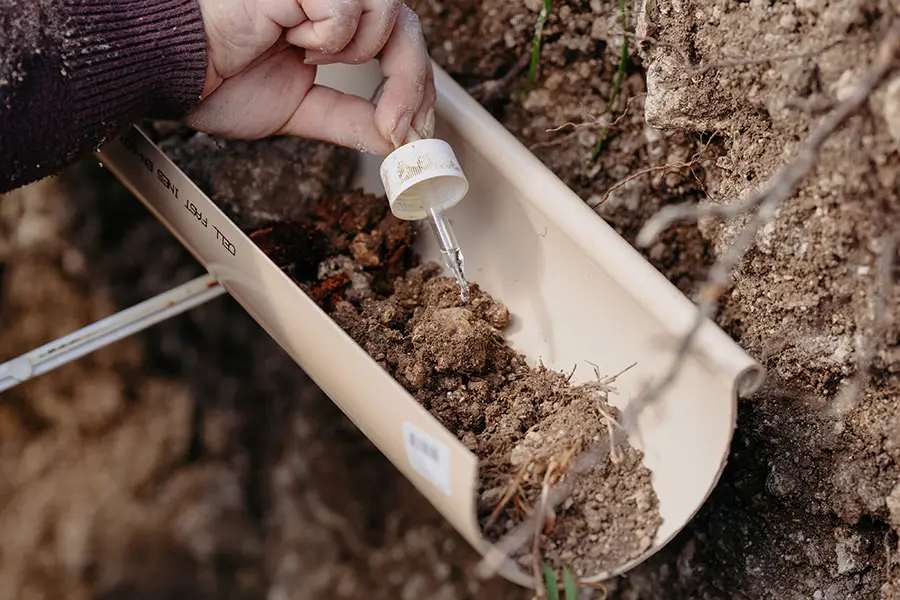
An example of this work is in our lavender and lavandin supply chain in the South of France where the production is increasingly suffering from the impacts of climate change. We partnered with the agroecological experts Biosphères to design, test, monitor and support the transition to regenerative agriculture practices, notably through the use of winter cover crops and adapted fertilisation.
Other projects where we are working with farmers and producers in partnership with the Givaudan Foundation to improve soil health include projects in Haiti in our vetiver supply chain and Madagascar in our vanilla supply chain.
Read more about our approach to biodiversity and sourcing responsibly in our latest Integrated Report.