
Progress for people
this Human Rights Day

Component content
On 10 December it is Human Rights Day – a moment to reflect on our progress and the challenges that lie ahead.
For Givaudan, protecting and promoting human rights is central to our purpose; particularly to our 2030 ambitions and beyond to source all materials and services in a way that protects people and the environment, and to improve the lives of millions of people in the communities where we source and operate.
As we continue to work towards these ambitions, we’re taking a look at our journey and recent impact.
Why is human rights such an important topic for Givaudan?
Component content
Why is human rights such an important topic for Givaudan?
At Givaudan, being ‘Human by nature’ means respecting people in everything we do. Upholding human rights isn’t just a duty, it’s who we are. Through our Human Rights programme, we seek to ensure dignity, fairness and safety across our own operations and throughout our supply chains.
What guides our approach?
Component content
What guides our approach?
Our global Human Rights Policy draws on leading international standards, from the UN Guiding Principles on Business and Human Rights, to the ILO Core Conventions and the OECD Guidelines for Multinational Enterprises. Strong oversight from senior leadership and integrated sustainability structures help embed these principles across all functions.
What are some of the key pillars that underpin our human rights work?
Component content
What are some of the key pillars that underpin our human rights work?
We start with due diligence. For example, ongoing risk assessments and field visits that help us identify, prevent, and address potential impacts, from fair wages and working hours to safety and non‑discrimination.
Collaboration is equally vital. Through our Responsible Sourcing programme, Sourcing4Good, we work closely with suppliers, conducting independent audits and building capability to drive positive change in their operations and communities.
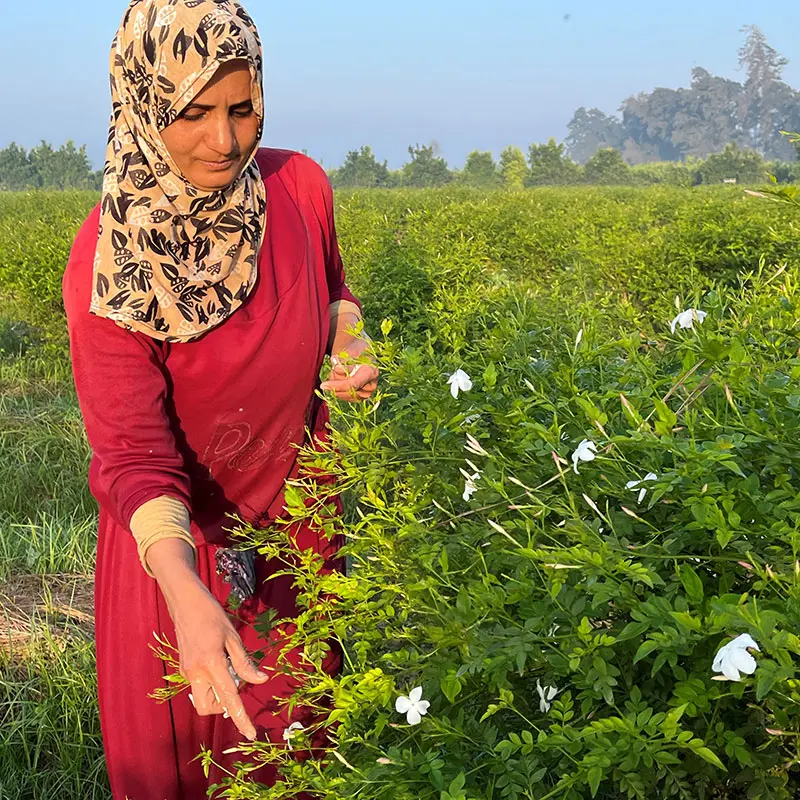
We also engage in multi‑stakeholder initiatives, such as the Fair Labour Association’s Harvesting the Future – Jasmine in Egypt project and with partners such as AIM‑Progress, to promote ethical sourcing and shared industry standards.
All of this rests on strong governance, education and community engagement, with grievance mechanisms, continuous training and local projects that make respect for human rights part of our everyday culture.
What are some examples of the progress we’re making?
Component content
What are some examples of the progress we’re making?
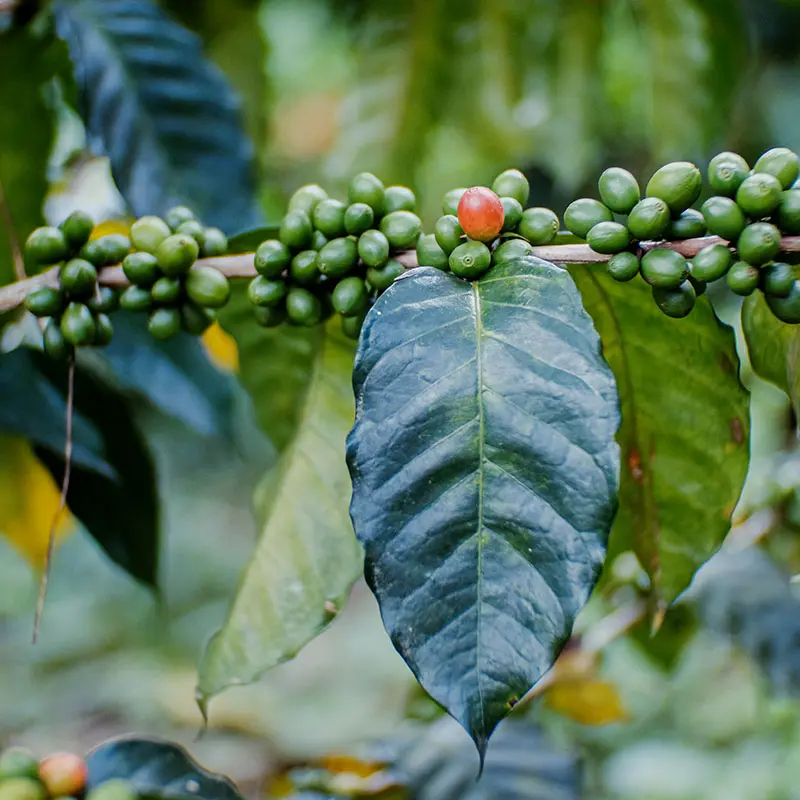
We’re advancing human rights across many supply chains and focus areas. For example, in our coffee supply chain in Brazil, we’re partnering with our key supplier to improve livelihoods, working conditions and sustainable farming practices.
In Haiti, a project driven by the Givaudan Foundation is supporting the organisational strengthening of the vetiver grower’s cooperative, promoting income diversification, and enhancing schooling conditions.
Education and training remain central. In 2023, we launched two global e-learnings: ‘Givaudan Human Rights and Business’ for managers and ‘Combating Modern Slavery in the Workplace’ for all employees. To date, more than 3,000 people, including our Executive Committee, have completed the courses, strengthening awareness and accountability worldwide.
We’re also tackling child labour risks through our Child Labour Training and Vigilance programme, active since 2021. It now covers 53 supply chains, engaging over 2,600 farmers and collector partners, and we aim to reach 100 supply chains by 2030 through continued training, field visits and shared action on due diligence.