
Tarragon Oil Hungary
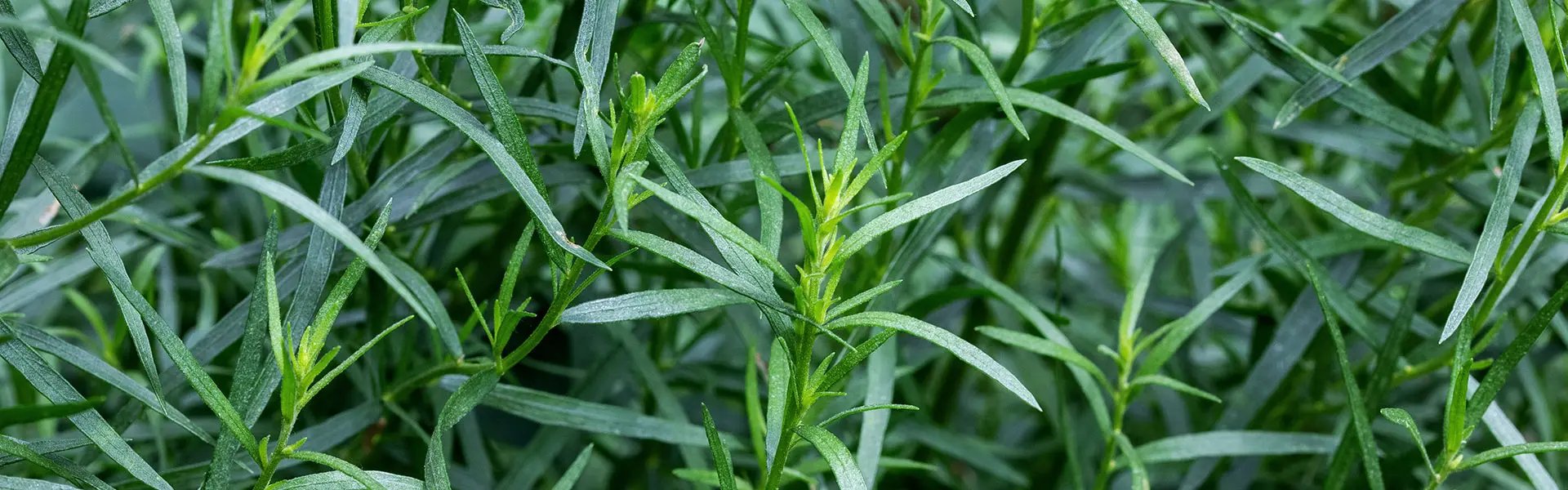
Tarragon can be used at the heart of citrus accords to give them a gourmand and aromatic facet. Within a fruity accord, fresh and natural notes will emerge. The essential oil finds its place at the heart of the reconstitution of aniseed notes through its liquorice and menthol facets.
Grown for its aniseed-flavoured leaves, tarragon is an aromatic plant much loved in French and Chinese cuisine. A deciduous perennial, tarragon forms a small bush with stiff, branched stems. The pale green leaves are narrow and pointed. The pale green flowers grow in loose clusters and cover the top of the stem. The plant does not produce fertile seeds and reproduces vegetatively.
The fibrous roots of tarragon are divided and the small segments replanted between February and March. Harvesting takes place in June and can be repeated in September. The plants are cut and then distilled. The crop can be productive for up to three years, after which it must be renewed. The raw material is processed into essential oil by steam distillation.
Known as ‘dragon herb’ or ‘dragoness’, tarragon has a very mysterious etymology. Its common English name ‘tarragon’ is thought to be a transformation of the Arabic word tarkhun, which means ‘little dragon’.
Have questions or need assistance? Our team is ready to provide you with the support you need. Click the button below to reach out, and let’s start a conversation!
Get in touch