
Sandalwood Oil Australia
A resinous top note that evolves into the woody, balsamic and creamy notes typical of sandalwood, with more earthy, terpenic and smoky dry-downs than its cousin, album. Sandalwood essential oil often accompanies other woody notes, as well as the vanilla or balsamic notes of oriental perfumes. It enhances opulent florals such as rose or jasmine.
Endemic to western Australia, Santalum spicatum trees grow wild in open woodlands and are also planted as forests. Widespread in the south-western part of the country, it grows in symbiosis with a plant in its environment, mainly those of the eucalyptus and acacia genera. This hemiparasite performs its own photosynthesis, but draws water and nutrients from its host through its root system. Both the host tree and the sandalwood tree are Western Australian species that grow naturally in the area and the resulting large biomass plantations provide native habitat for local flora and fauna.
Sandalwood is harvested from both wild and cultivated trees. The harvesting process combines indigenous knowledge with modern technological information systems. Every tree harvested in the wild is GPS-mapped before and after harvesting, and the Western Australian government verifies harvest sites annually. Prior to harvest, each tree is analysed to ensure the levels of alpha and beta santalol are high enough to produce the correct quality essence.
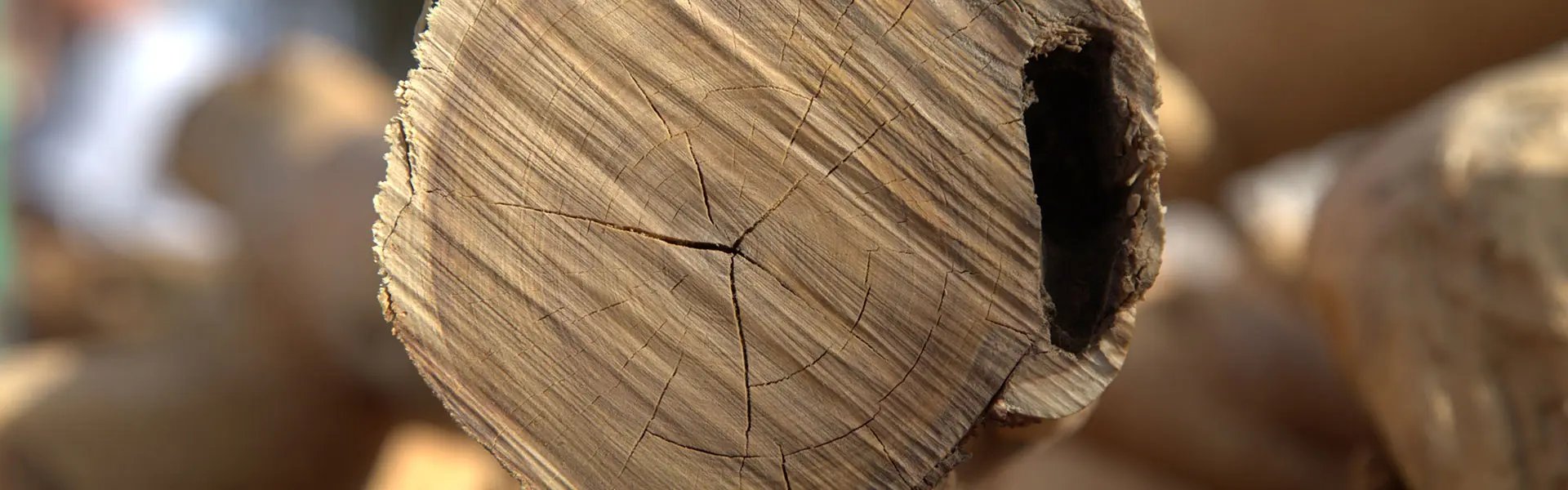
The soft, fragrant, darker heartwood of the Australian sandalwood tree is surrounded by a rough, fibrous bark. The trunk and roots, once stripped of this bark and chipped, are the parts that are distilled to extract the essential oil. This makes the replanting of Australian sandalwood trees essential to conserve the resource.
The raw material is processed into essential oil by steam distillation, where the hot steam releases the oil as it passes through the plant material. The steam carries the fragrant molecules through the condenser, where the oil and water return to their liquid form. The oil is separated from the water by decantation.
First distilled experimentally in 1875, Australian Sandalwood Essential Oil began to be produced sporadically by a few small Australian distilleries. As the popularity of the essential oil grew, so did the exploitation of the wild tree. It became one of the most important sources of income for the Western Australian economy, as well as enabling the development of the outback. To ensure the sustainability of the natural sandalwood resource, harvesting has been regulated since 1920 by the Western Australian Sandalwood Control Act (1929). Plantations have been established to replenish tree populations and essential oil is only produced from these managed sources.
Have questions or need assistance? Our team is ready to provide you with the support you need. Click the button below to reach out, and let’s start a conversation!
Get in touch