
Osmanthus Gold Absolute China
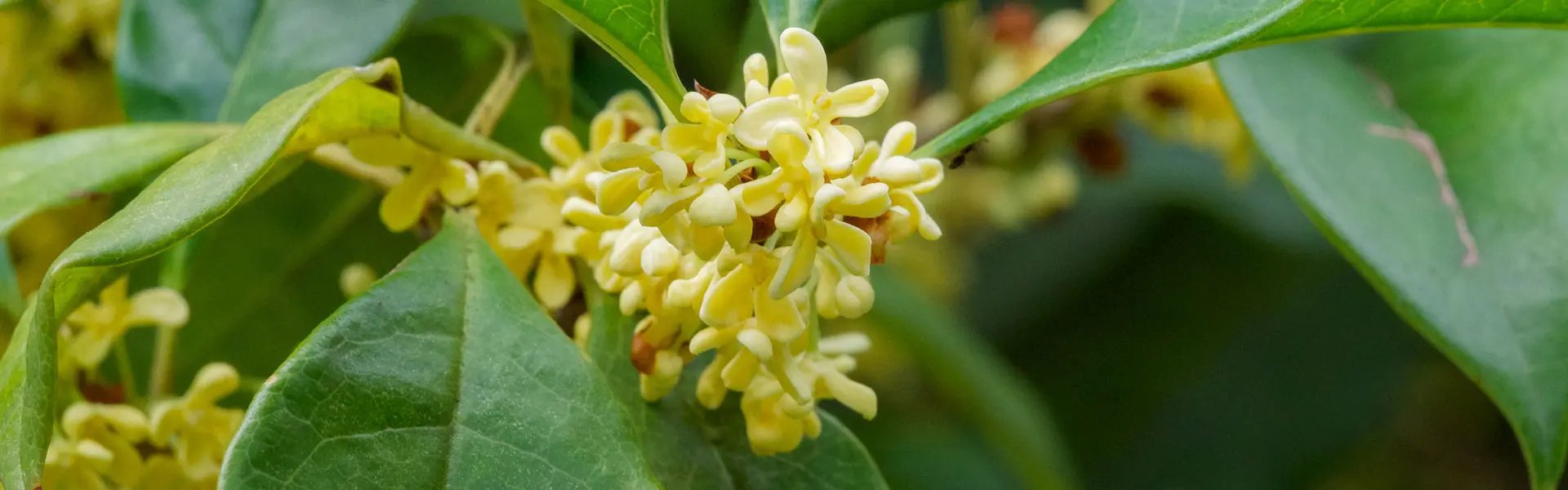
Osmanthus Gold Absolute has freesia, jasmine and peach notes and is fresher and lighter than the classic Osmanthus Absolute. The floral notes are richer and more fruity. Its olfactory profile is floral, fruity, freesia, jasmine-like, peachy, apricot-like, sweet with a hint of green.
Osmanthus Absolute is used in the heart of floral accords to add a sensual touch. It is used in reconstitutions of yellow fruits, tobacco or syrupy accords to give them a fruity and floral touch.
Osmanthus fragrans is an evergreen shrub that can reach a height of twelve metres. It grows at an average altitude of 1,000 metres in many southern Chinese provinces such as Guilin, Zhejiang, Sichuan and Anhui, where the sun is warm and abundant. The trees flower from September to mid-November. The flowers are harvested manually by beating the branches of the trees with long sticks so that the flowers fall onto a large sheet spread out on the ground.
Fresh flowers wither very quickly, so they are preserved in brine for a short time to develop the olfactory precursors. After salting, the notes are stronger and more stable, with ripe fruit, lactonic and sweet floral notes.
The flowers are washed with water to remove salts and impurities before being extracted with a volatile solvent into concrete. Storage of the concrete is the final stage of the aging process, during which the tea notes are developed. To remove the waxes and concentrate the olfactory components, the concrete is washed with ethanol at our factory in Spain to obtain the absolute.
Originally from the eastern Himalayas of Asia, Osmanthus has been cultivated in China for more than 2,500 years and was often planted in the imperial gardens of the Forbidden City in Beijing. Today, the flowers are traditionally used in food, wine and beverages.
Have questions or need assistance? Our team is ready to provide you with the support you need. Click the button below to reach out, and let’s start a conversation!
Get in touch