
Lavandin Grosso Oil France
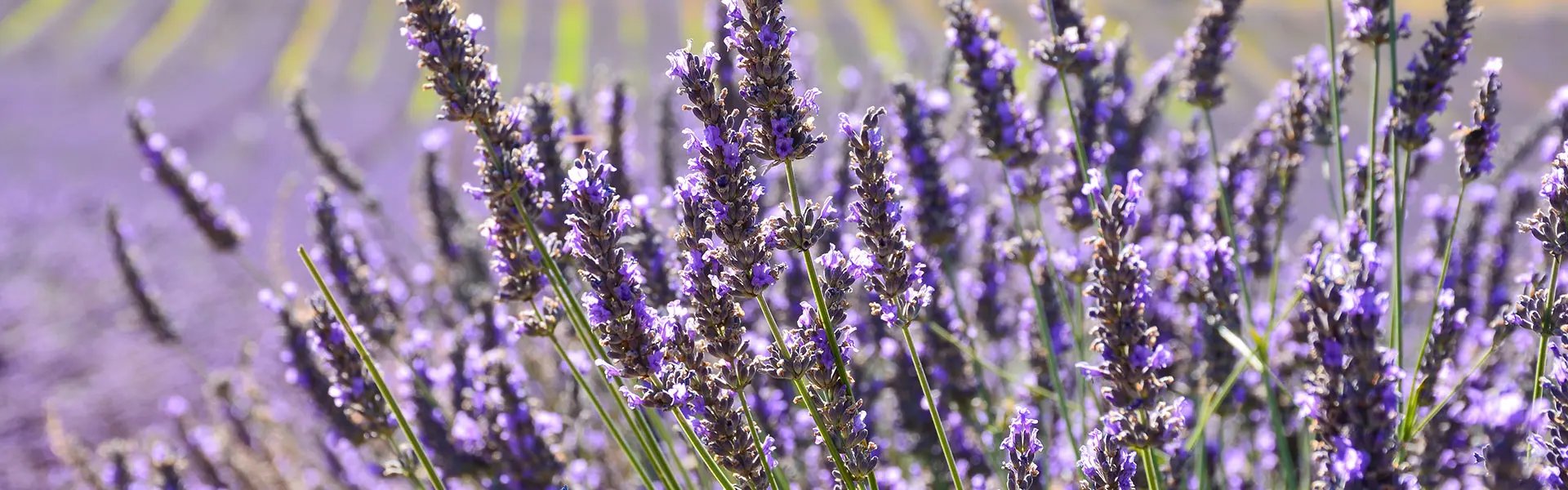
Once seen as a substitute for lavender, lavandin grosso has carved out its own identity. Cultivated only since the 1930s, lavandin spreads its iconic scent with more herbal and camphor-like undertones compared to traditional lavender. Lavandin grosso oil has a more direct and incisive aromatic note with herbaceous facets compared to lavender oil, which is more floral.
Lavandin is more commonly used in hygiene products such as detergents and soaps than in fine perfumery. In general, its soapy and camphor notes make it a good raw material for functional perfumery.
Lavandin grosso was first grown for its essential oil in early 20th century. Lavandin, Lavandula x intermedia, is a natural hybrid between sweet lavender and spike lavender, with a stem up to 80 cm long and two lateral branches. It is sterile and reproduces only by cuttings. When the plant is in flower, it gives the landscape a very characteristic wave of purple colour.
The harvest lasts a little over a month between July and August. Rain can intensify the flowering. The method of harvesting lavandin is called ‘vert broyé’ in French, a forage harvester cuts and crushes the stems and flowers. For lavandin, the stems are cut and loaded directly into a wagon. They are then transported to the distillery, where a lid is placed over the wagon to turn it into a sealed still. To prevent the essential oil from developing a ‘boiled’ note, the transformation takes place in the first hours after cutting.
This technique was invented in the 1990s to increase productivity. Distillation takes place immediately after the harvest, in the same lorry box in which it was collected, with no intermediate handling.
Lavender has been known for centuries and is grown in several countries, including France. However, it does not dominate the landscape of Provence as you might think. Lavandin is much more common there, about four times as much as lavender.
Have questions or need assistance? Our team is ready to provide you with the support you need. Click the button below to reach out, and let’s start a conversation!
Get in touch