
Jasmine Sambac Absolute India
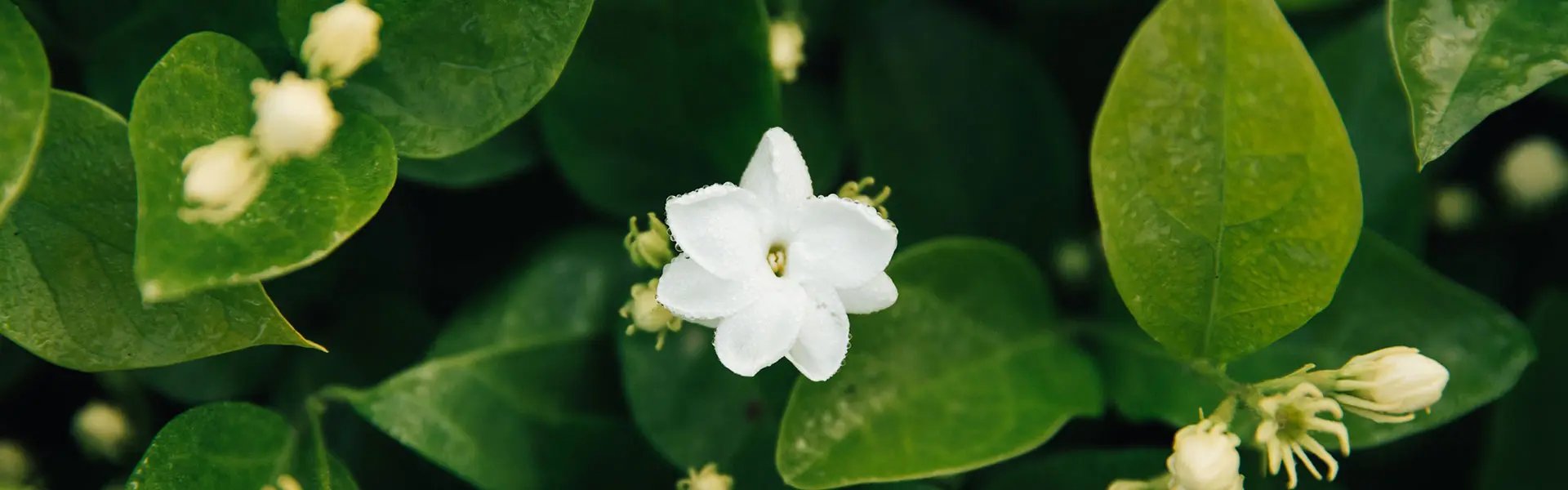
Jasmine sambac has an intriguing floral green bouquet. Compared to Jasmine grandiflorum, it has an intense floral note with more anthranilate compound, giving orange blossom nuances to the jasmine scent found in Jasmine grandiflorum.
The indole molecule in it gives a more natural animal side that is quite floral in the background. It also has a strong green fruity facet, reminiscent of honeysuckle or banana. The freshness is a little dazzling at the top and the background is quite animal, very green and honeyed.
There are two main types of jasmine used in perfumery: Jasminum grandiflorum (found in Grasse, Egypt or India – it has five long petals) and Jasminum sambac (mostly grown in India – with thicker petals).
Jasmine sambac blooms on a Gaussian curve from March to October: it starts slowly, peaks and then slowly declines. Every 45 days the shrub produces new and abundant flowers. It is harvested in the early hours of the morning, when the flower is still a bud and not fully open, in order to preserve its fragrance. The flowers selected to be made into absolute are left on the ground for two hours and aired regularly. This allows the flowers to open, from bud to full flower.
At the local factory, the jasmine sambac flowers are processed into concrete. The concrete is then washed with ethanol at our factory to obtain the absolute.
In India, the freshly picked flowers, which are known locally as ‘Madurai Malli’, are sold in the flower markets as 90% of the Indian jasmine production and used for religious rituals and ceremonial garlands.
Have questions or need assistance? Our team is ready to provide you with the support you need. Click the button below to reach out, and let’s start a conversation!
Get in touch