
Myrrh Resinoid Somalia
Myrrh resinoid exhales fresh mushroom facets reminiscent of the smell of the forest and its moist, earthy, living soil. It gently evolves into a more woody and mossy aspect. There is also a spicy note of saffron, with a slightly metallic side. These notes are rounded off by a hint of liquorice, which is more like candy than a stick. Compared to the essential oil, the resinoid is softer but quite identical.
Myrrh resinoid is generally used in the heart of orientals, as well as in liquorice accords. It is a perfect complement to woody notes.
Commiphora myrrha is a robust shrub that grows in the arid and desert regions of northern and eastern Africa, mainly in Somalia. Its branches are covered with long thorns and, in the rainy season, with large, bottle-green leaves.
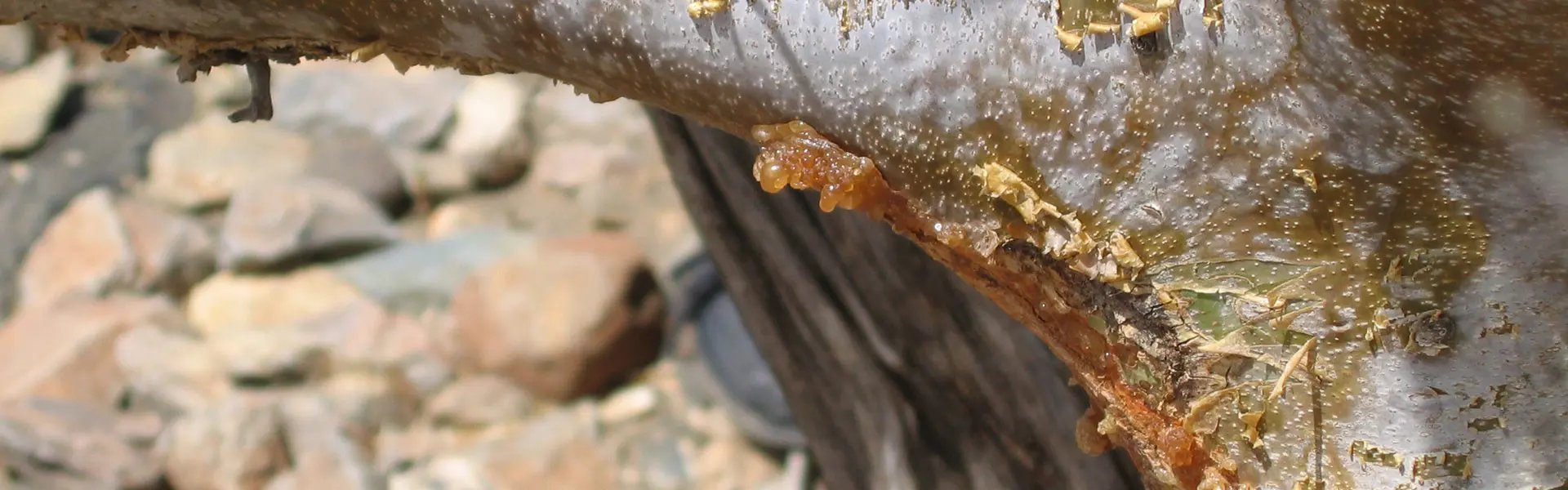
Farmers in Somaliland collect the resin the trees shed spontaneously, as well as the tears from cuts in the bark. The resin tends to stick together into pieces that harden over time. From a white-yellowish colour, they turn into a dark reddish mass with a thin yellow dust. Pieces of wood, pebbles, etc. are removed by hand. Once dried, the resin is sent to our factory in Spain to be transformed into resinoid through ethanolic extraction.
Myrrh has been known since ancient times and was an ingredient in the famous Egyptian kyphi. Several recipes for this mixture have been handed down, ranging from 10 to 50 ingredients, but always including myrrh.
Have questions or need assistance? Our team is ready to provide you with the support you need. Click the button below to reach out, and let’s start a conversation!
Get in touch